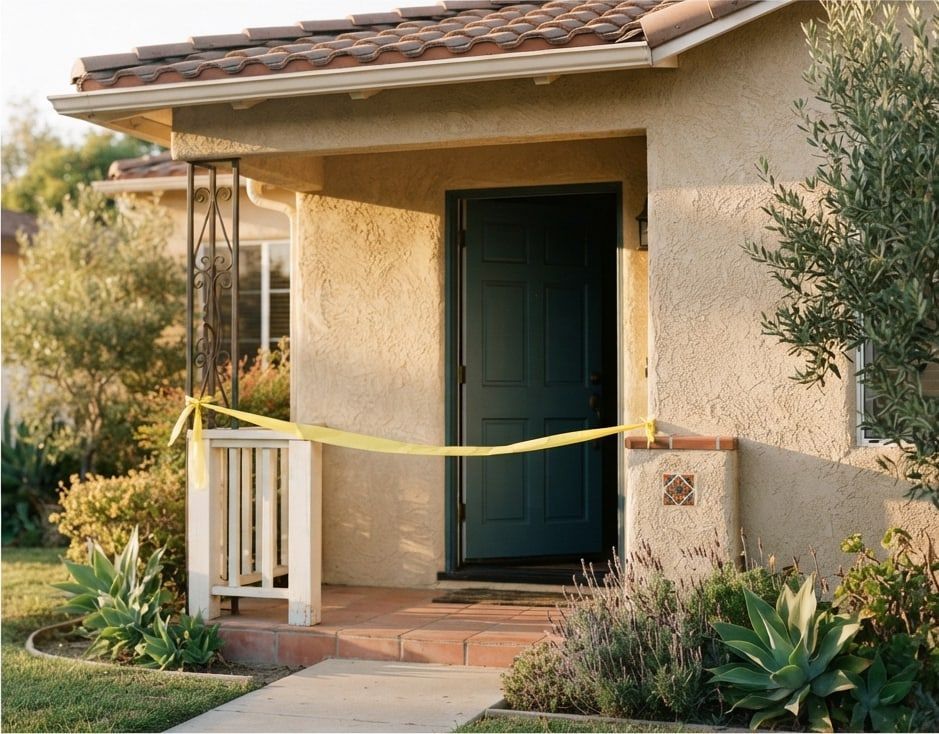
Crime scene cleanup through Riverside Bio Clean covers homes, apartments, businesses and vehicles in Riverside, Moreno Valley, Corona, Fontana, San Bernardino, Ontario and the towns around them. The crew removes blood, tissue and other body fluids, takes out anything porous that can’t be disinfected, clears fingerprint powder, and hauls the waste away as regulated trauma scene waste.
Español: leer esta página en español
Before anyone cleans, the scene has to be released
A crime scene belongs to the investigating agency until it says otherwise. In the City of Riverside that is usually the Riverside Police Department; in unincorporated areas and contract cities it is the county sheriff. Fontana, San Bernardino and Ontario each have their own police department. If you aren’t sure the property is released, ask the officer or detective on the case before touching anything. The non-emergency numbers for both counties are in our first 24 hours guide.
Crime scenes covered
- Shootings and homicides
- Blood and tissue across floors, walls and ceilings, often in more than one room, plus the squares of carpet or drywall investigators cut out.
- Stabbings and assaults
- Blood tracked through the house, on door frames and handles, and down into carpet and upholstery.
- Break-ins with injury
- Blood on broken glass and window frames, and forced-entry debris to clear before the place can be locked up again.
- Domestic incidents
- The affected rooms are sealed off so the household can stay. Ask for a quiet arrival if the neighbors are a worry.
- Cars and trucks
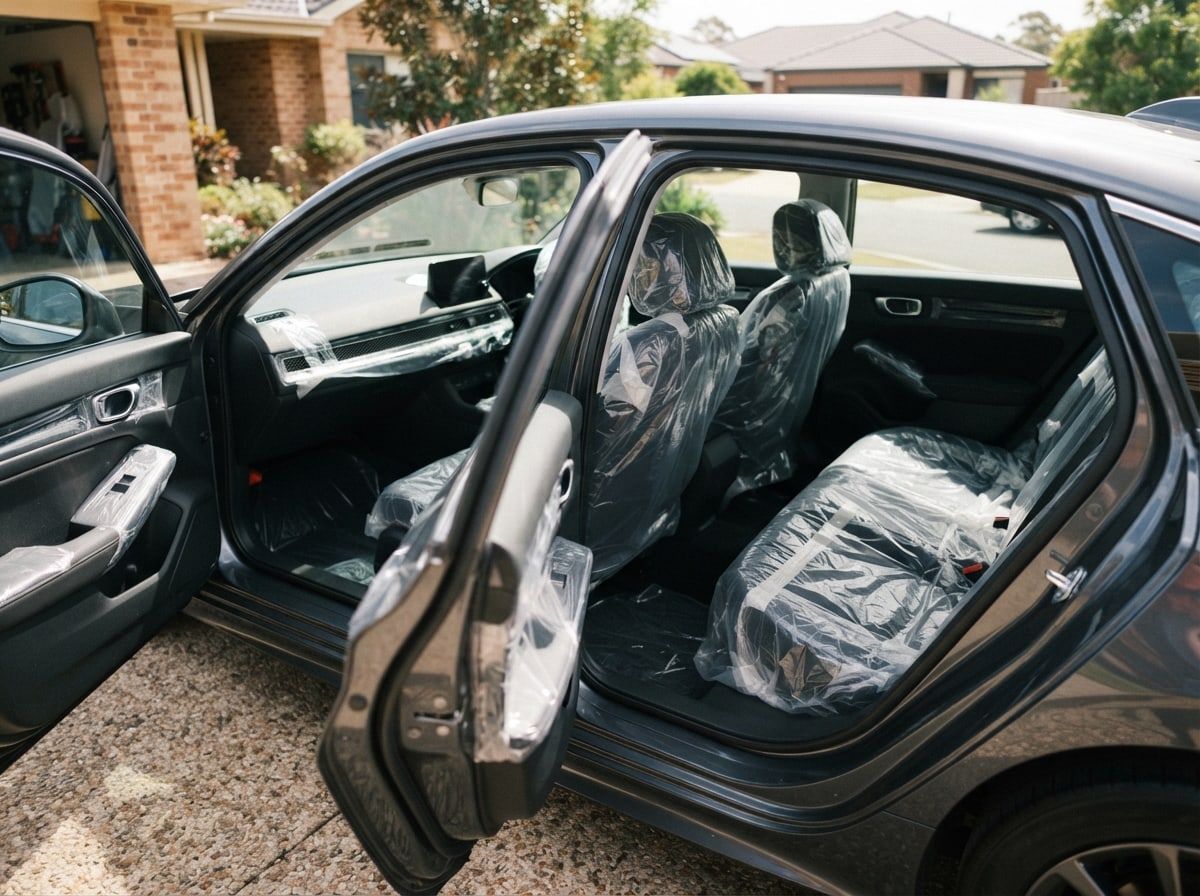
- Vehicles back from a police hold, with blood in the seats, carpet and headliner.
- Shops, offices and common areas
- Stores, lobbies, stairwells and parking areas, scheduled around opening hours where that works.
Blood under the baseboards and powder on every door
What you can see from the doorway is usually the smaller part of the job. Blood travels further than it seems: it wicks into carpet pad, runs under baseboards and into tile grout, and spatter reaches ceilings, light fixtures and the backs of furniture. Investigators add their own layer: fingerprint powder on doors and surfaces, chemical reagents, and sometimes cut-out sections of carpet or wall taken as evidence.
What crime scene cleanup services cover
- Visible blood and tissue, cleaned and then disinfected with an EPA-registered disinfectant
- Carpet, pad, mattresses, upholstery and other porous items that absorbed fluids
- Drywall, trim or subfloor where fluids soaked in and cleaning can’t reach
- Fingerprint powder and chemical residue on doors, frames and surfaces
- Broken glass and sharp debris, including from forced entry
- The odor, once the source material is gone
The crew separates what can be cleaned and returned from what has to go. Point out anything sentimental or valuable before the work starts, so nothing that could have been saved gets thrown out.
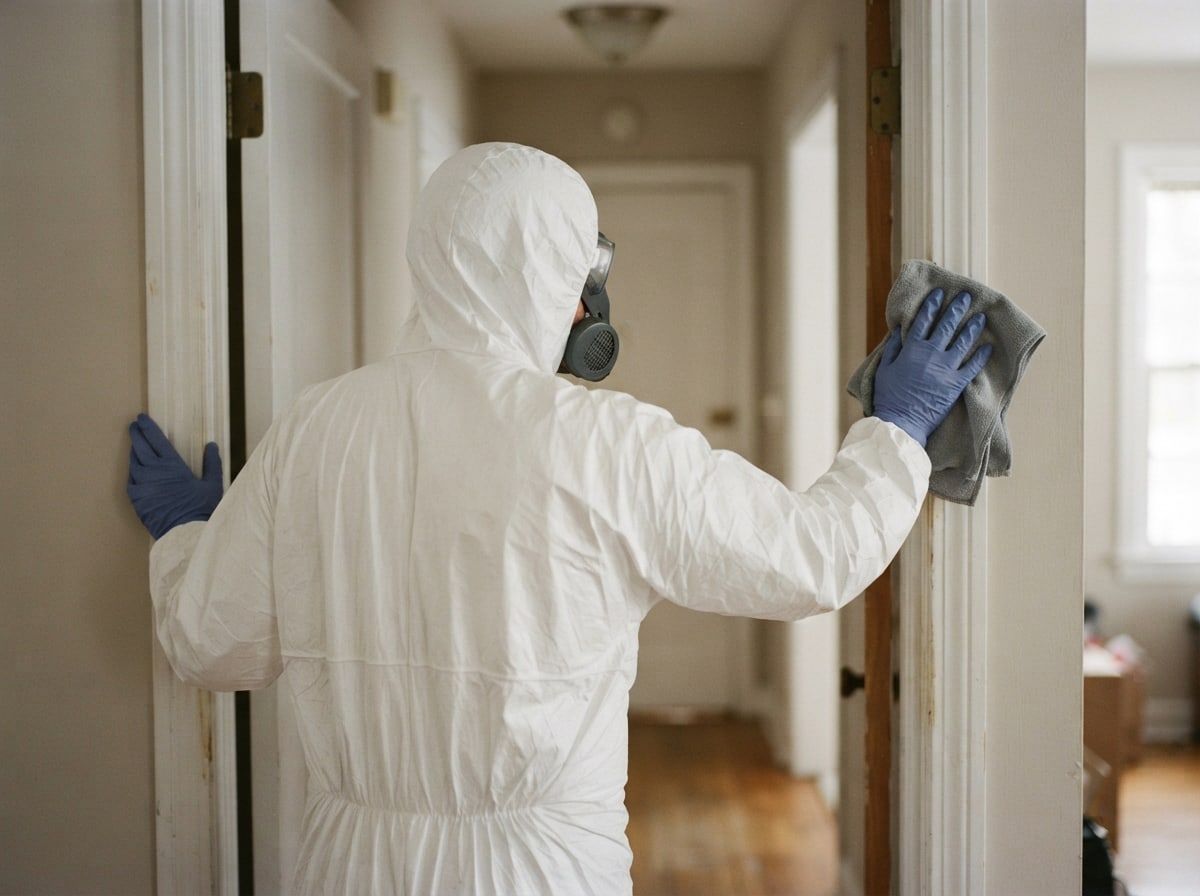
From the release to the final check
- Release
- The agency that investigated tells you the scene is released. Until then nothing is cleaned or moved.
- The call
- You say what happened, the kind of property and the ZIP code, and whether anyone is still living there.
- Assessment
- The crew checks the visible areas and the hidden spread under flooring and behind trim, then gives you the scope and price in writing.
- Removal
- Anything porous that took on blood, and any evidence cut-outs, is packed as regulated trauma scene waste.
- Cleaning
- Surfaces are cleaned and disinfected, fingerprint powder and chemical reagents come off, and glass and debris are cleared.
- Final check
- The crew goes over the area before it leaves, and you see the result in person or in photos, with the disposal records.
Cars, trucks and workplaces
Vehicles get the same treatment. Seats and headliners take on fluid the way upholstery does, and some cars cost more to clean than they’re worth, so ask about that on the walk-through. Businesses carry an extra duty: employers have to protect workers from blood exposure under the federal OSHA bloodborne pathogens standard, which is a good reason not to hand a mop to someone on shift.
When the crime was in a home or a car
California victim compensation can reimburse part of a cleanup after a crime in a residence or a vehicle, and only when the crew is registered with the Department of Public Health. The insurance and victim compensation guide explains who can apply. What moves the price is in the cleanup cost guide.
Questions once the police have gone
Do the police clean up after a crime?
No, officers and crime scene investigators collect evidence and then release the property. Blood, tissue and fingerprint powder are left for the owner or tenant. The same goes after paramedics or the fire department leave.
How do I know when the cleanup can start?
When the investigating agency tells you the scene is released. If no one said so, ask the officer or the case detective before anything is touched, because cleaning too early can destroy evidence.
Is fingerprint powder hazardous?
It isn’t a biohazard, but it’s a fine dust that clings to everything and smears when wiped with water. Some powders are magnetic or fluorescent. The crew takes it off with the right cleaners so it doesn’t spread.
Can someone stay in the house while the room is cleaned?
Usually, yes, because the crew seals the affected room with plastic sheeting and works inside it while the rest of the house stays in use. Keep children and pets well away from the work area.